Enter your email address:

Delivered by FeedBurner

Wednesday, April 26, 2017

That First Scratch

 It was bound to happen, and it didn't take long. I got a parking ding on the new car. It was one of those drive-by-hit-the-mirror-before-driving-away accidents that happen routinely downtown. The damage wasn't bad, but still, I felt a pang.

We aren't a real car family. We tend to drive them into the ground, and even when we do buy a new car, it's never really new. My first car, purchased in 1978, was a white Impala that I bought for $100. I spent another $5 on a can of white spray paint from K-Mart which I used to cover the rust on the fenders and doors.

 It wasn't pretty (not as nice as this by a longshot), but my boyfriend could fix anything that went wrong with chewing gum and bailing twine, and it ran. I drove it to college and eventually sold it for $100.

Over the years, depending on the number of kids we were hauling around, the cars got bigger, with vast backseats. We had two Oldsmobile Silhouettes that we bought from my father-in-law which we drove into the ground. They were the type with the vast front windshield. It felt like you were driving an arcade video game. The last one, by the time we finally got rid of it, had a door that literally was tied shut with baling twine. It went on many family road trips and I would venture to guess it plays heavily into my children's summer vacation memories. They would listen to an old mix tape that was labeled, "Driving With Dad." Cliff still has the mix, and in fact, has gifted the children with memorial CD's. They speak with great fondness of the time they were fighting over a big bottle of Coke in the backseat and Cliff, while driving, grabbed it out of their hands and poured it out the window. "I can still see it streaming along the windows at 80 miles an hour," is how my daughter remembers it.  "Not my finest hour," is how Cliff recalls the incident. But they all laugh.

 Then there was the shiny red Sebring convertible. I loved that car, and Cliff bought it for me. It certainly wasn't his first choice. My dad said at the time, "I guess everybody has to make that mistake at sometime in their lives," and shook his head. And he was right. We rarely put the top down because it was either too cold or windy. When I bought it I had three small kids, so dropping them off at school meant one in the front seat, two in the back. "Shotgun!" was our morning rallying cry. I sold it the year we acquired a South Korean exchange student. Three teenagers just didn't fit in the back.

We bought a Jeep instead. I loved that car, too. It could practically move sideways, that's how good the turning radius was, and it also carried us on many family trips. Never mind the fact that it got eight miles to the gallon. We had it for a decade.

So, we bought the shiny red "Every Car." You know the one. It has a modern-day wagon look, with the windows that get smaller in the back, and the hatchback in lieu of a trunk. It goes a lot farther on a tank of gas, it's comfortable, and it boasts a Bluetooth phone and stereo system. But I have trouble finding it in a crowded parking lot.
I never had that problem with the white Impala.

Friday, April 14, 2017

Driving The World Over - Part Two

Yesterday I took a driving safety course, required by the company I work for. It wasn't a bad experience. Good advice. Reminders like swerve to the right rather than the left into on-coming traffic and don't drive if you can't see past the hood of your car. In Guatemala the rule is "butts on the ground," which means when riding in the back of a pick-up truck down the highway at 75 miles per hour, don't stand.

It's dangerous, of course, and that's why it's illegal to do it in the United States. But there's no doubt you can get an excellent view of everything this way.


There are the street views, so different from the way things look in the U.S.


And there's the countryside, which has a beauty all its own.


We seem much more concerned about our personal safety here than they are there. I can only speculate on why this is. Perhaps the view there is more fatalistic. Again, I never saw a Guatemalan wearing a seatbelt, and it was very common to see a family of four on a single motorcycle. I asked my driver whether there were a lot of fatalities on the roads and he said yes, it was a big problem. So why, I wondered, didn't people wear seatbelts? His response was a shoulder shrug and a smile. "Es lo que es," he said. It is what it is.  


Saturday, April 1, 2017

On Visting the Chimeltenango Dump


  I should start out by explaining that I'm in Guatemala covering the opening of The God's Child Project Casa Jackson Hospital for Malnourished Children. While I'm here, I'll be doing some stories for KFYR-TV. The first one has to do with homelessness and the way people struggle here to feed their kids. Sometimes they fall short, and that's when GCP steps in.
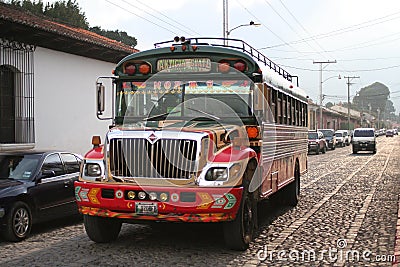
    Getting from place to place in Guatemala is an adventure. Public transportation comes in the form of a brightly-painted bus (the so-called chicken bus),
Resultado de imagen para chicken bus guatemala free use
 a tuk tuk (a three-wheeled motorcycle covered in a tarp)
Resultado de imagen para tuk tuk guatemala
 or an open truck with metal framing on the sides to  provide handholds for people who ride standing up, which I did. 
Image may contain: 2 people
There I was, speeding down the highway with my hair flying, the other cars whizzing by, close enough to touch. It's a mountainous road, as are most here, and passing is perilous. Not that it stops anybody.The guy standing in the  back of the truck yells down to the driver when he thinks it's safe to pass. It's the ultimate trust exercise. 
(copy and paste this url if it doesn't open and you want to see video of the dump)
     Our destination was the  dump in Chimeltenango. Like most dumps, you can smell it long before  you see it. Burning garbage smells the same the world over. But here, the blowing dust combines with the smoke. We spy a woman raking the trash on a hillside very near the flames. My guide, Heneo, approaches the woman to ask if we can interview her. She agrees and my photographer Javier and I trek through the smoke. Her sharply-lined face is covered in soot, her eyes are red-rimmed with irritation and she appears to be in her late fifties or even sixties. She tells me she is 34 years old, the mother of five, the oldest  of whom is 21. I see two small children playing at the bottom of the land-fill, hiding under the shade of a tree. I assume they are hers. She says, with Heneo interpreting, that her husband died leaving her with no way to  make a living, so she and her children spend their day sifting for recyclables. They earn about a dollar a day. As she tells me this, tears track a black trail down her face as she asks for help. I ask where she lives and she points to a cave carved into the side of a hill not ten feet away.There is a young woman sitting there, holding an infant who they say is about nine months old. The baby's  face is also covered with grime, but he does not open his eyes or even stir. The girl tells  me the baby is sick with a cough. It's not hard to see why, as the two of them are in the direct path of the smoke. We hand them money and turn to go. Immediately, the mother heads back down the hill to continue her raking. 
    Half of the population of Guatemala is living in poverty. For 25 percent that poverty is extreme. Offering money may fill an immediate need, but the real answer is education. It's important for this woman's children to go to school. Getting them there is the goal of The God's Child Project.

Tuesday, March 21, 2017

On New Cars (or, Waiting For That First Scratch)


I have never liked being told what to do. When I was perhaps four or five I decided it would be a good idea to “wash” my father’s brand new car with sand. I had a grand time “helping” him. I wasn’t alone. Another neighborhood boy had the bright idea first and lured me in. Just imagine the moment my dad saw what we’d done. He was a gentle guy, but on this occasion he couldn’t even talk to me. He just handed me off to my mother. For the rest of that car’s life, it had swirls in the paint. It wasn’t malicious on my part. I didn’t really understand what I was doing. Still, I’m sure that was little comfort to my dad.

Today, I picked up a new car; new to me at least. Shiny red and clean and reliable (I hope). I traded in our well-loved 2002 Jeep Liberty to get it, and actually felt a little pang letting the Old Reliable go. It’s been a fun companion and has seen a lot of Naylor road trips and good times. But these days I am on the road a lot, and public speaking makes me feel anxious enough without the added worry of whether my car will make it.


As I was driving it out of the lot I was being extra careful with it, sort of the way I drove for the first time with my newborn daughter in the car. I’m sure that feeling will wear off quickly. But it reminded me a lot of a fellow I used to work with who, first thing every morning, dumped a half a cup of coffee all over his desk “just to get it over with.” Perhaps I should just go out there and ding it…just to get it over with. Perhaps not. I’m sure it will happen soon enough, with or without my help. Wish me happy trails!

Monday, March 6, 2017

The Final Taboo in Our Sunset Years

I ran across an article recently whose subject was the Death Cafe. Apparently it's a movement that's circling the globe. There's a website, and here's its description:

At a Death Cafe people drink tea, eat cake and discuss death. Our aim is to increase     awareness of death to help people make the most of their (finite) lives .

Having studied on and written about death at length, I found the idea of this intriguing, but also a little sad. These discussions seem to be a kind of group therapy for people who are questioning, seeking or are simply afraid, but can't talk with those closest to them because the conversation gets a big shut down. I know how that is.

I wrote my book, Gift of Death - A Message of Comfort and Hope, because I wanted to (I admit it) force a loved one to think about his approaching death. I continued it with the hope that what I had discovered and the comfort that followed, would also be a help to others who are afraid. The issue I struggled with most during the writing and subsequent publishing of the work was what to call it. My friends and mentors helped me bounce around several titles, and there were two camps. One thought that if I wanted to sell it I should avoid the word "death" at all costs. The other thought I should include the word because, well, why hide what the book is about? In the end I put it out there on Facebook, and the title you see is the one that came back with the most positive hits. 

Even so, people tend to squirm when I tell them what my book is called. One elderly woman phoned me specifically to ask for my book because she's a fan and she knew I'd been writing. She didn't know what it was about, and said she didn't care. She just wanted to read it. I sent it to her. I asked her weeks later what she'd thought of it and she admitted she hadn't even cracked the cover. In fact, it was hidden away. She explained, "I'm a lot closer to death than you are, you know, and I don't want to be scared." Clearly, she already is. To calm her fears, I basically told her everything that was in the book, and why it would be a comfort to her, but still she hasn't read it. 

The article I read said that death is the last taboo subject in our modern world, and so who better to discuss it with than total strangers. I think there's a better way. Look someone you love in the eye, and ask them this:

"Where do you think you'll go when you die? And if you're afraid, let's talk about that." 

If it's just too scary, read my book. I think it will help. 


Wednesday, February 22, 2017

The Big Move


  Today's world is small. Unless you live in North Korea (and even there if you know where to look), we all seem to have access to the latest thing thanks to the Internet, the 24-hour news cycle and the availability of world travel. But 45 years ago, California felt about as far from North Dakota as you could get. I moved from the West Coast to Bismarck in 1971, and it was a year of firsts for me.
   My father sold Olympia beer, and I still remember the day he came home and told my mother he had been transferred. He may as well have said we're moving to Timbuktu. We had to pull out a map. The one thing we keyed in on was the "north." We knew that it was a place both cold and remote. When we told friends where we were going, inevitably, they said, "Where's that?" followed by "Why on earth?" Still, it wasn't our first move, so onward and northward we went.
   We packed our lives into Bekins boxes and drove to the airport. I'd never been on a plane before, and we flew first class. There was nothing cardboard about it. Dinner was served on china dishes with real silverware and linen napkins. My brother and I were served Coca Cola, a rare treat for us back then, and my parents drank champagne from glass flutes. That was back in the days before there were doors on the cockpits, and I remember the captain calling my brother and me up to look at the controls before he pinned wings on us and made us honorary pilots.
 
A TOWN WITH ONE TAXI
 

   When we landed, we were driven in a cab to the motel that would be our home for weeks while my parents waited for our new house to be ready. A cab ride might not seem remarkable, but this one certainly was. It had jump seats; a lot of fun for kids. The motel we stayed in had a pool, also a huge deal. Those experiences eased the transition for me. That fall I started sixth grade in a public school, after my years in Catholic elementary. I traded in the school uniforms that had always made getting dressed in the morning easy and painless, for jumpers that made me stand out in a way I didn't appreciate. Most of the rest of the kids wore jeans, something that hadn't been allowed in my schools. I had experienced snow before, thanks to a couple of years spent in Spokane, but never the kind of snow and cold that North Dakota gets.
     I remember that first Christmas begging for ice skates, but then being unable to use them because I couldn't stand the cold that the other kids seemed to take in stride. Bismarck had its own culture, very different from the one I'd been surrounded by in California, with our big, noisy extended family. But culture, like the cold, is something kids adapt to.
     These days I'm right at home in the very middle of North America, and I wouldn't want to leave it behind for anyplace else. But there are those February days, like today, where I do a little California Dreamin'.